The Card Number Is Dying
Online checkout is moving away from typing 16 digits toward tokens, one-click checkout and biometric passkeys.
The most familiar ritual in online shopping may be on its way out: finding your card, squinting at 16 digits, typing the expiry date and hoping you did not miss a number.
Mastercard says it is working toward a European checkout experience where manual card entry is phased out by 2030. The important distinction is that the card itself is not necessarily disappearing. What is disappearing is the need for you to type its number every time you pay online.
Manual entry is the thing that is dying
In June 2026, Mastercard said three in five of its e-commerce transactions in Europe were already tokenised.
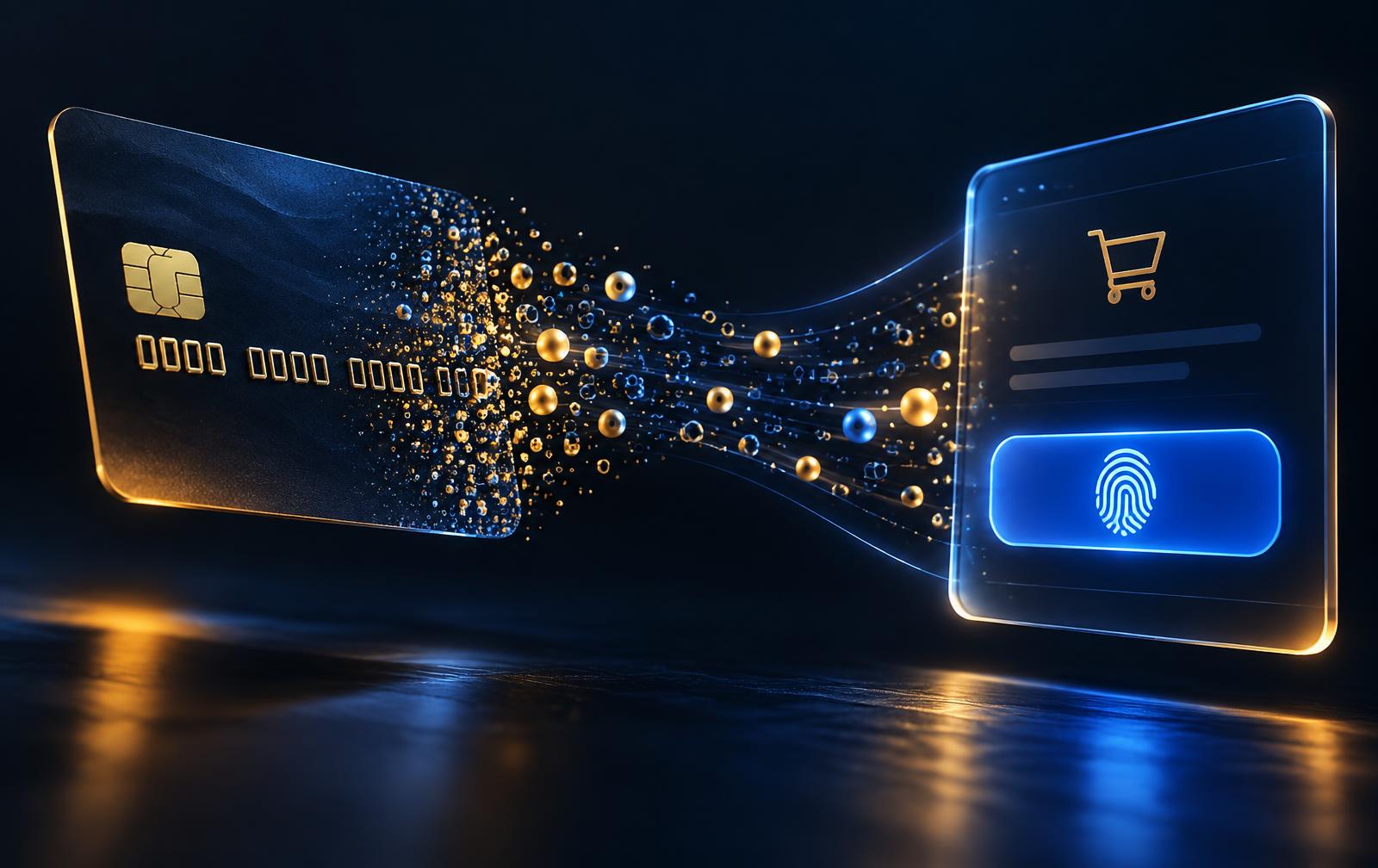
Tokenisation replaces the card number used in a transaction with a secure digital token. In practice, that means the payment can still be linked to your card account without repeatedly exposing or manually entering the static number printed on the card.
This is one of those changes that sounds technical until it becomes invisible. Contactless payments followed a similar path: first they felt novel, then they became the normal way to pay.
The future of the card number may be that it still exists — but you almost never have to see it.
Checkout is becoming an identity problem
The second part of the shift is authentication.
Instead of remembering passwords, waiting for codes or re-entering card details, payment passkeys can use the same kind of biometric verification people already use to unlock their phones.
Mastercard is also expanding Click to Pay, its one-click checkout system. As of June 2026, the company said Click to Pay was available in 32 European markets, with enrolments more than doubling as adoption expanded. Returning customers accounted for more than 70% of Click to Pay checkouts.
That points to a broader change: online payments are becoming less about entering financial information and more about proving that you are the authorised person making the purchase.
Why this matters to consumers
Typing a card number is a small inconvenience. But digital products are often transformed by removing small inconveniences at scale.
A checkout that recognises your credentials, uses a token behind the scenes and lets you approve the purchase with your face or fingerprint has fewer steps between wanting something and buying it.
That is good for convenience. It also changes expectations. Once consumers get used to one-click or biometric checkout in one place, manually entering a card elsewhere starts to feel unusually slow.
Why merchants and banks care
The consumer sees fewer boxes to fill in. The payment industry sees a different infrastructure.
Mastercard says merchant tokenisation is now live in 45 European countries and territories. The company argues that tokenised credentials can improve security and approval rates because merchants do not need to rely on the same static card details in the same way.
For banks and payment providers, the strategic question is simple: who owns the easiest checkout experience?
If people stop thinking about the card number, the visible part of the payment relationship becomes the wallet, the bank app, the browser, the device or the checkout button.
The card becomes infrastructure
This does not mean physical cards vanish in 2030.
It means the number printed on them may become less important to the customer experience.
The card can remain the underlying account credential while the consumer interacts with tokens, passkeys, wallets and trusted devices instead. The payment method stays. The ritual changes.
That distinction matters because technology often replaces interfaces long before it replaces the infrastructure underneath them.
What to watch
The interesting question is not whether every card number disappears.
It is how quickly people stop typing them.
Watch the adoption of payment passkeys, the spread of one-click checkout and how quickly banks make these tools a default part of their apps and cards.
If the shift continues, manually entering 16 digits online may eventually feel like writing down a cheque number: still understandable, still possible — but strangely old-fashioned.
Source
- Mastercard Newsroom: Mastercard Advances Europe's Checkout Transformation on the Road to 2030
- #payments
- #digital payments
- #tokenisation
- #checkout